
Compare Cowley County Property Values
A Cowley County property value can mean three different things. It might be an appraised market estimate. It might be a classified assessed amount used for taxes. It might also be evidence pulled from a recorded deed. Each figure comes from a different property record, and the dates rarely line up. The county parcel schema publishes fields like Value, PriorVM, VM, ValidSale, Book, and Page. That makes comparison easier. No actual sale amount appears in the accessible schema. The Book and Page fields point to deed records, though. One may exist there.
| Value | What It Is | Where |
|---|---|---|
| Appraised market value | County estimate of fair market value for tax work | Appraiser record and notice |
| Assessed value | Classified percentage to which levies apply | Appraiser and tax roll |
| Recorded sale evidence | Consideration or transfer reference, when present | Recorded deed and book/page |
| Independent appraisal | Opinion prepared for a specific date and purpose | Licensed appraiser, not county parcel data |
Kansas does not tax appraised value directly. Instead, the state applies classification ratios. Each Cowley County parcel is assessed at a rate tied to its use. Residential property carries an 11.5 percent ratio under K.S.A. 79-1439, while agricultural land, vacant lots, and utility property follow their own rates. Applying the residential ratio to every parcel will skew any value comparison.
Look Up Cowley County Property Value
The Cowley GIS and property route links an address to the county parcel dataset. When copying a number, keep the value year and property class attached. The live Beacon card displays vary, so screen labels and field order may differ from visit to visit.
- Search the address and save PIN, KSPID, QuickRefID, legal description, class, and district.
- Read the value fields with their year or notice date. Do not relabel an unclear field.
- Use book and page to ask the Register of Deeds for the recorded transfer when sale evidence matters.
- Compare like property classes and dates. Ask the Appraiser about classification or valuation method.
- Assessed value
- The classified portion used in tax calculation.
- Appraised value
- The county's fair-market estimate for tax administration.
- Assessment ratio
- The statutory percentage applied for a property class.
- Consideration
- The value stated or reflected in a transfer instrument, when available.
Cowley County Parcel Value Fields
An official parcel REST layer adds context beyond the value itself. It carries acreage, class, district, neighborhood, quality, condition or use, and year built. It also includes agricultural or market-acre fields. That detail helps explain why a Cowley County appraisal looks the way it does. It still does not expose the Appraiser's complete work file.
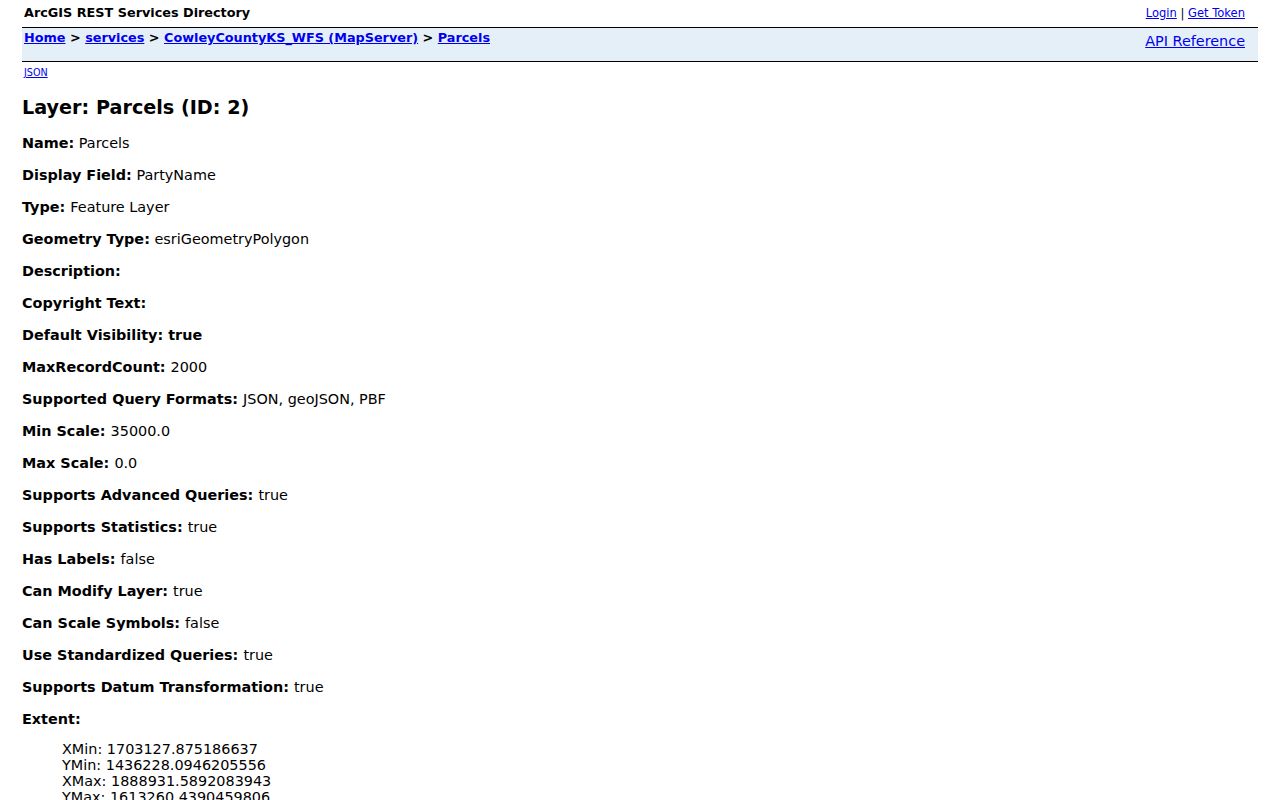
Cowley County parcel records label their value fields plainly, and the schema shows each field name. The fields alone give no countywide trend, ratio study, or sample sale amount.
Cowley County Residential Ratio Is 11.5 Percent
Classification rates come from K.S.A. 79-1439. That Kansas statute governs how property records translate appraised value into assessed value. Residential land and improvements are assessed at 11.5 percent of appraised value. Vacant lots sit at 12 percent. Agricultural property carries 30 percent, and public utilities 33 percent.
The Kansas Department of Revenue illustrates the math with a simple example. A home appraised at $100,000 yields $11,500 in assessed value. That is before any exemptions or mill levies apply. The figure is a formula illustration, not a statement about any particular Cowley County property.
Cowley County's 2026 Notice Route
The Appraiser page states that 2026 value-change notices were mailed on March 1 and can be viewed online with an authorization code. Taxpayers then have 30 days from the mailing date to file an appeal. That notice route is private to each owner of record and stands apart from public parcel data.
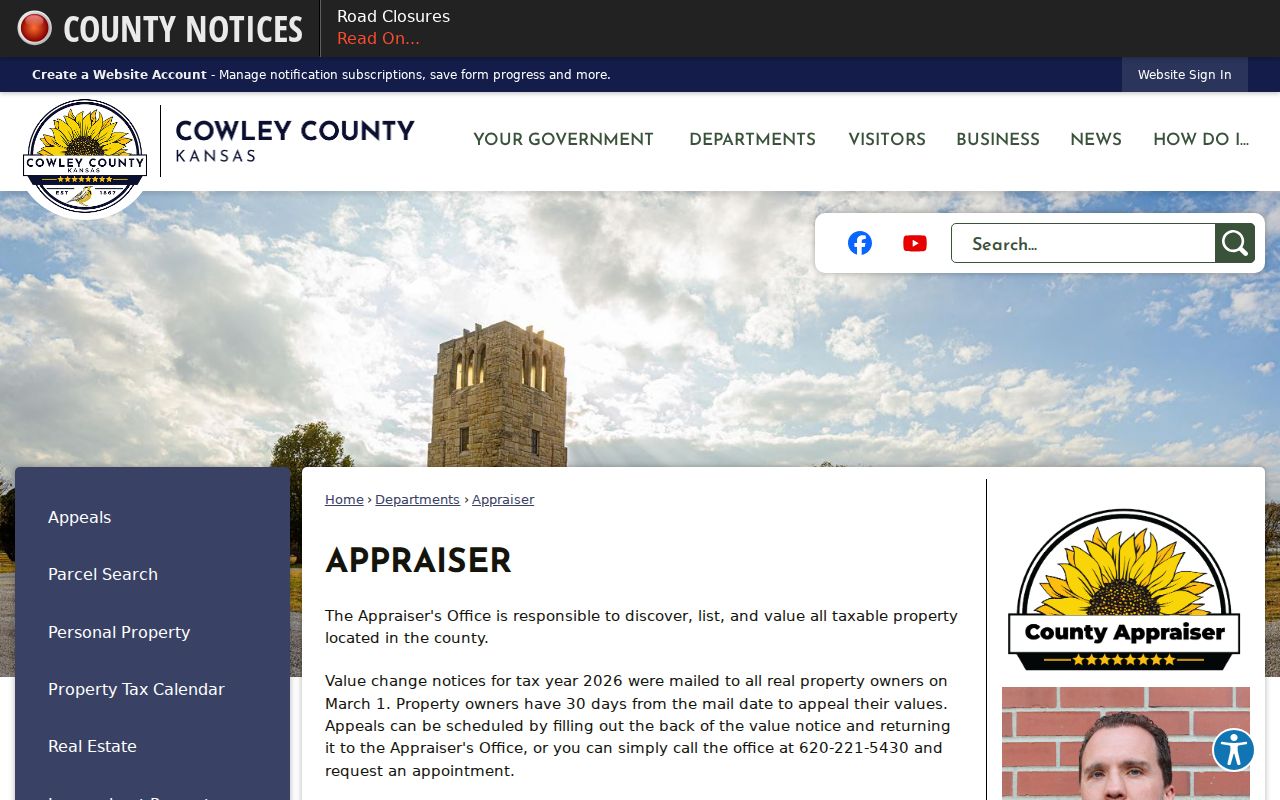
The county's valuation office handles the notice process for Cowley County property records each year. The mailed notice governs each parcel's deadline and value.
Cowley County Sale Evidence Stays Separate
The parcel layer carries a valid-sale indicator and book and page fields. But the public results show no price and no date. When a transfer amount matters, request the recorded instrument from the deed records. A deed may state consideration or stamp information. That figure still reflects just one transaction and its terms.
A sale price can stray far from assessed value. Timing, condition, related parties, bundled land, financing, or a non-market transfer can all push it off. Cowley County publishes no countywide ratio study or value trend. One parcel's numbers cannot stand in for either.
Cowley County Assessed Value Has Limits
Cowley County assessed value exists to administer the tax roll. It does not promise what a parcel will sell for. Nor does it serve as a title opinion, a boundary survey, or a transaction appraisal. The county's number also rests on a valuation date. That date may not match today's market.
Value versus price. Cowley assessed value is for taxation and does not state what land will sell for. Seek an independent appraisal for a current market opinion.
The county Appraiser runs a countywide valuation process with equalization analysis. A private appraisal answers to one client, one interest, one effective date, and one purpose. A deed, meanwhile, records the consideration from an actual sale. All three can disagree with each other and still be right, because each reports a different kind of evidence from the property records.
Cowley County Classification Changes the Math
Always carry the property class along with any Cowley County value comparison. The parcel schema holds a Class field plus district, neighborhood, acreage, and agricultural value-proportion fields. Residential, agricultural, vacant, exempt, and mixed parcels each follow their own math. Reclassification alone can move assessed value even when the appraised market estimate barely shifts.
Agricultural entries track total ag acres and value-level components. The county publishes no complete parcel calculation online. Ask the Appraiser how your land was classified. Ask which fields drove the current notice. Never infer productive use or eligibility from acreage alone.
Cowley County Values Move Through a Calendar
Kansas sets the value calendar by law, so every figure you see carries a date. The Appraiser mails value notices March 1. An informal appeal window comes next. The Appraiser certifies the finished roll June 1. The County Clerk certifies it July 15. The Treasurer receives it November 1. A tax statement printed in winter therefore reflects a later stage of the cycle than a spring value notice. Comparing the two without that context invites confusion.
Copy a figure and record the tax year. Also record the retrieval date, the property class, and the source you pulled it from. A prior-year value field can flag change. The public card's labels and history range are not documented. Cowley County publishes no ratio study, no last revaluation year, and no full market trend summary. Treat those gaps as gaps.
Evidence Behind a Cowley County Value
A value argument lives or dies on its evidence. Gather documents tied to the parcel and the valuation date. The county's appeal material points to several kinds of proof. Comparable sales matter most. Photographs, appraisal material, repair or condition facts, and classification evidence also carry weight. A strong case explains why another property is comparable. It should not lean on a nearby address alone.
Keep each office's role straight. The Appraiser, at 321 E. 10th Ave. in Winfield, handles value inspection and equalization questions. The Treasurer handles the tax amount and payment. The Register of Deeds holds the recorded sale instrument. Sorting these duties keeps a tax bill from being mistaken for an appraisal. It also keeps a deed price from being mistaken for the current county value. For the official procedure, the Cowley appeal page is the county's own resource.
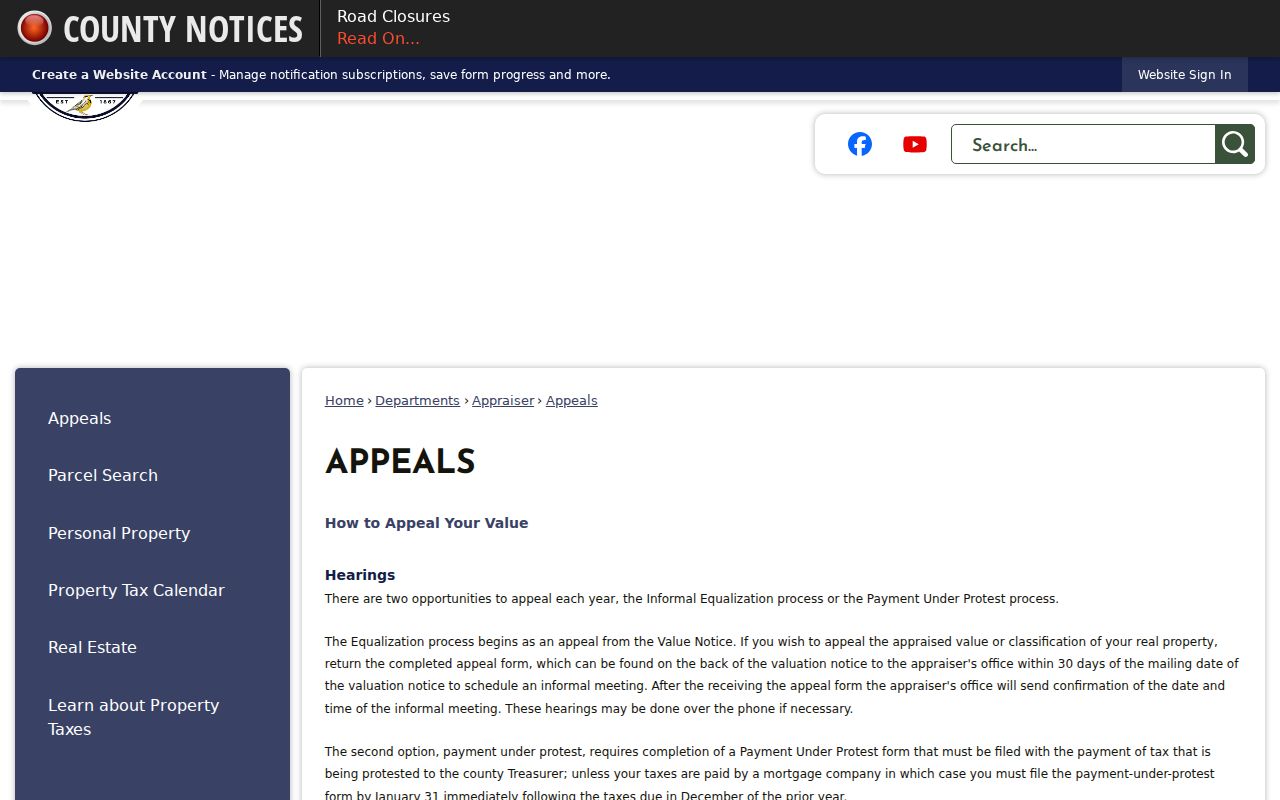
The county appeal page is the current official source for procedure, while the individual value notice supplies the parcel-specific facts.